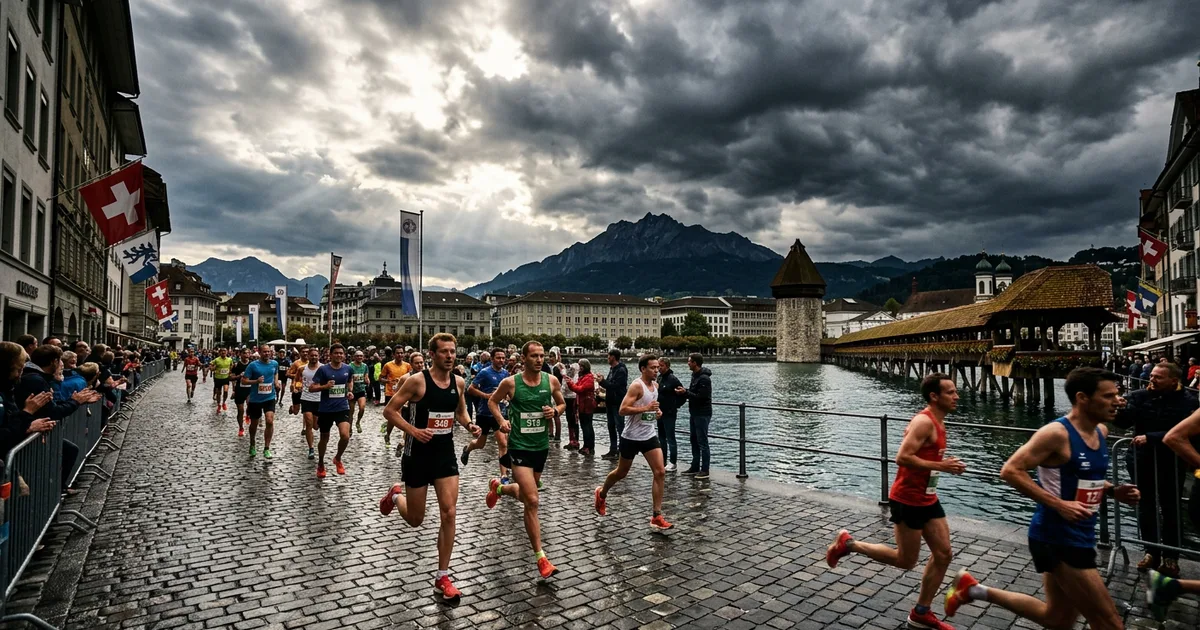
The Lucerne Marathon, held on October 4, 2026, starts and finishes in Lucerne's city center, providing runners with a well-organized and accessible event. The race offers several categories including a full marathon, half marathon, and team relay. The course takes participants along the shores of Lake Lucerne, offering clear views of the water and the surrounding mountain landscape. Runners pass through charming neighborhoods and well-maintained paths, combining urban and natural scenery. The event draws both competitive athletes and casual runners, supported by local volunteers and medical teams stationed throughout the route. Spectators can enjoy designated viewing points along the course and gather in the finish area for post-race celebrations. The timing of the marathon in early October usually means mild autumn weather, ideal for endurance running. The race is officially timed and certified, attracting international participants. Registration opens several months in advance, allowing runners to plan their training accordingly. The Lucerne Marathon is an opportunity to participate in a well-regarded Swiss running event within a compact and scenic city setting.
Tips for Attending
•Register early as spots fill quickly, especially for the full marathon.
•Wear layered clothing suitable for mild autumn weather and possible rain.
•Use public transport to reach the city center due to road closures on race day.
•Stay hydrated and make use of the water stations positioned along the route.
•Arrive early to warm up and familiarize yourself with the start area.
Practical Information
Dress in moisture-wicking layers to adapt to changing temperatures. Good running shoes with proper support are essential. Booking your marathon entry and accommodation well in advance is advised due to the event's popularity. Check weather forecasts in the days before the race and plan accordingly. Carry your race bib and ID on race day.
Embark on an unforgettable Alpine journey with this 2-day tour from Lucerne to the Top of Europe, in Switzerland's magnificent Jungfrau region. With your guide, travel by coach through the idyllic Bernese Oberland and ride the cogwheel train to Jungfraujoch, Europe's highest railway station surrounded by stunning snow-capped mountains and glaciers. Stay overnight at a 3-star hotel in the wonderful Alpine town where you'll have free time to enjoy scenic outdoor activities like hikes, lake cruises, cable car rides and bike rentals.
The Berner Oberland Pass grants travelers unlimited travel on trains, buses, and boats throughout the Bernese Oberland region for a consecutive period of 3, 4, 6, 8, or 10 days. Starting from Lucerne, visitors can take scenic train journeys over mountain passes and through valleys, accessing well-known destinations such as Interlaken, Grindelwald, Lauterbrunnen, and Thun. The pass also includes boat cruises on Lake Thun and Lake Brienz, providing a varied mode of travel that showcases the region's diverse landscapes. The itinerary is flexible, allowing travelers to tailor each day based on their interests and pace, moving seamlessly between alpine villages and lakeside towns without additional ticket purchases. Key stops along the routes include Interlaken, a town stretching between Lakes Thun and Brienz, offering views of the Jungfrau massif. Grindelwald lies at the foot of the Eiger North Face, where visitors can witness rugged cliffs and alpine meadows. Lauterbrunnen valley features 72 waterfalls, such as the Staubbach Falls, cascading down sheer cliffs. Boat rides across Lake Brienz reveal turquoise waters framed by pine forests and towering mountains, while Lake Thun presents panoramic vistas of castles and pleasant villages. Each location invites visitors to absorb the crisp mountain air, hear the rush of waterfalls or the gentle lapping of lake waves, and observe the traditional Swiss chalets dotting the landscape. The pass is designed for independent travel rather than guided tours, offering flexibility in timing and route choice. Transport consists of punctual and efficient Swiss trains, local buses winding through mountain roads, and comfortable passenger boats operated by regional companies. Group size varies naturally as travelers use public transport, but staff at stations and on boats provide helpful information when needed. The pass reduces the hassle of buying multiple tickets, allowing spontaneous day trips and easy access to hiking trails, cultural sites, and local markets. This travel option suits people who enjoy self-directed journeys with a focus on natural scenery and regional culture. Ideal for outdoor enthusiasts, photographers, and those interested in authentic mountain towns, the pass provides a comprehensive means to experience the Bernese Oberland without fixed itineraries. It also benefits frequent visitors who want to revisit favorite spots or venture off the main tourist paths over several days.
The Mount Rigi Day Pass allows visitors to traverse the famed Rigi massif near Lucerne at their own rhythm, offering an opportunity to engage deeply with the mountain's natural landscape and panoramic vistas. The itinerary typically begins in Lucerne, where travelers board a boat across Lake Lucerne to Vitznau. From Vitznau, the historic cogwheel railway climbs steadily to Rigi Kulm, the mountain's highest point. After spending time at the summit, visitors can choose to descend towards Arth-Goldau or return via the same route. The pass grants the freedom to combine boat, cogwheel railway, and cable car rides across multiple stops, enabling a fully customizable day in the alpine environment. Key stops on the route include Vitznau, where the cogwheel railway was inaugurated in 1871 as the first of its kind in Europe. At Rigi Kulm, visitors encounter sweeping views of the Swiss Plateau, the Alps, and the lakes below. The summit area features walking paths, picnic spots, and a historic hotel. Descending towards Kräbel or Rigi Staffel reveals alpine meadows dotted with wildflowers in summer and snow-covered scenes in winter. Arth-Goldau offers a connection back to Lucerne by train, passing through forested hills and small villages. Each stop presents a different perspective on the mountain's geography and the interplay of water, rock, and forest. Practical details of the journey include the flexibility to travel independently or in small groups, as the day pass is not tied to guided tours. Transport modes are a combination of historic cogwheel trains, modern cable cars, and scenic boats, all well maintained and punctual. The cogwheel train features spacious windows and gentle gradients, allowing passengers to hear the rhythmic clatter of the gears and smell the fresh alpine air. The boat journey across Lake Lucerne offers a different sensory experience, with the lapping of water and panoramic lake views framed by mountains. Visitors should plan their day according to seasonal schedules and weather conditions. This day pass suits travelers who appreciate natural landscapes and wish to experience the mountain environment without the constraints of a fixed itinerary. It benefits those interested in photography, hiking, or simply spending time outdoors near Lucerne. Families, solo travelers, and couples can all benefit from the flexibility, as the pass allows for tailored pacing and the option to stop at various points. It also appeals to history enthusiasts interested in the engineering heritage of the cogwheel railway and alpine transport.
' Upon arrival at Vitznau, passengers transfer to the cogwheel railway, which ascends the mountain through mixed forests and alpine meadows, offering panoramic views of the lake and the distant Bernese Alps. The journey culminates at Rigi Kaltbad, a spa village perched on the mountain’s slopes, providing a tranquil setting for relaxation. Visitors can choose to return via the same route or opt for a boat ride from Weggis back to Lucerne, completing a circular itinerary that combines mountain and lake travel. Key stops include Vitznau, where the cogwheel train departure station sits by the lake, characterized by the sound of steam engines and the fresh scent of pine. The ascent offers glimpses of grazing cows and wildflowers during warmer months, while the summit provides sweeping views over Lake Lucerne and the surrounding peaks. At Rigi Kaltbad, the mineral baths use natural spring water, filling indoor and outdoor pools with gently warm water, surrounded by wooden terraces and alpine scenery. The mineral-rich water is said to have therapeutic properties, and the spa area includes saunas and relaxation rooms. The optional boat ride from Weggis allows visitors to enjoy the crisp lake air and the reflections of mountains on the water’s surface. The tour operates with small to medium-sized groups to maintain a calm atmosphere, with guidance provided via audio commentary or optional local guides at key points. Transport includes a boat cruise, cogwheel train ascent and descent, and optionally, a lake boat ride back to Lucerne. The transfers are timed to provide ample opportunity for taking in the vistas and visiting the baths without rush. The pace is leisurely, allowing for self-directed time at the mineral baths and photo stops along the route. This tour suits travelers who appreciate nature, moderate physical activity, and a combination of relaxation and sightseeing. Those interested in alpine landscapes, tranquil spa experiences, and a taste of Swiss mountain transportation will find the itinerary rewarding. It is also ideal for visitors who prefer a structured day trip starting and ending in Lucerne without the need for private transport or extensive hiking.
This service offers one-way train tickets between Lucerne and Interlaken, enabling travelers to journey through the heart of Central Switzerland by rail. The route primarily follows the scenic pathways along Lake Lucerne and then ascends towards the Bernese Oberland region, delivering views of alpine meadows, lakeside villages, and distant snow-capped peaks. Passengers can choose to travel from Lucerne to Interlaken or vice versa, making this a flexible option for integrating into broader travel plans across Switzerland. The journey itself, typically lasting around two hours, runs aboard modern and comfortable Swiss Federal Railways trains, designed for smooth travel and large panoramic windows that frame the passing scenery. Key stops along this route include the lakeside town of Weggis, known for its mild climate and vineyards, as well as the town of Brienz, which sits on the shores of Lake Brienz and is famous for its woodcarving tradition. Further along, the train navigates through small alpine stations such as Meiringen, where the Reichenbach Falls—associated with Sherlock Holmes lore—are located. Finally, the route reaches Interlaken, a gateway town situated between Lake Thun and Lake Brienz, with views of the Jungfrau massif. Each stop offers glimpses of traditional Swiss architecture, pastoral landscapes dotted with grazing cows, and crisp mountain air. Tickets are sold per individual traveler with no group size restrictions, allowing for solo travelers, couples, or families to book as needed. The journey is unescorted, meaning passengers navigate stations independently, but clear signage and announcements in multiple languages assist with connections. Trains are equipped with comfortable seating, restrooms, and sometimes dining cars where light refreshments can be purchased. The rail link is part of Switzerland's well-known punctual and efficient public transport network, ensuring reliable departures and arrivals. This ticket option is best suited for travelers who prefer a flexible, self-guided travel experience and who appreciate the ease of train travel through alpine regions. It appeals particularly to those who want to witness the scenic landscapes between Lucerne and Interlaken without the constraints of a set tour schedule. Additionally, it serves as a practical link for visitors planning to engage in hiking or outdoor activities in Interlaken or to enjoy Lucerne’s city attractions before or after the train ride.